Sunday, June 30, 2019

America Unearthed, Season 4, Episode 6, Culper Spy Ring

I have to admit I had never heard of the George Washington's Culper Spy Ring, let alone the mysterious Agent 355, before filming this episode.  I had certainly heard of my tipster, Valerie Plame, before having the pleasure of meeting her in person.  Back in 2003, she was outed as a CIA spy by the George Bush administration upon the direction of then Vice President, Dick Cheney.  Valerie's outing was the vindictive response to her husband's editorial that essentially accused the Bush administration of getting the U.S. involved in the Iraq War under false pretenses their country was hiding weapons of mass destruction.  It turned out the editorial was right, but damage to Valerie's career was done.  She was the perfect person to launch me into this investigation with truly fresh, unbiased eyes.

Allison Pataki and I quickly concluded that Peggy Shippen Arnold was not working for George Washington behind her husband's back thought she was a fascinating woman regardless.  The second suspect, Anna "Nancy" Strong's contributions to the war effort was heroic for sure, but her lack of proximity to New York City eliminated her as the female spy who we know spent a lot of time working behind the scenes and under the radar of the British army.  That person could only have been Elizabeth Bergin, who risked her life helping prisoners on death ships escape to freedom.  She was the right person, in the right place, at the right time.  She should now be recognized as the Revolutionary War hero that she was.  What do you think?       


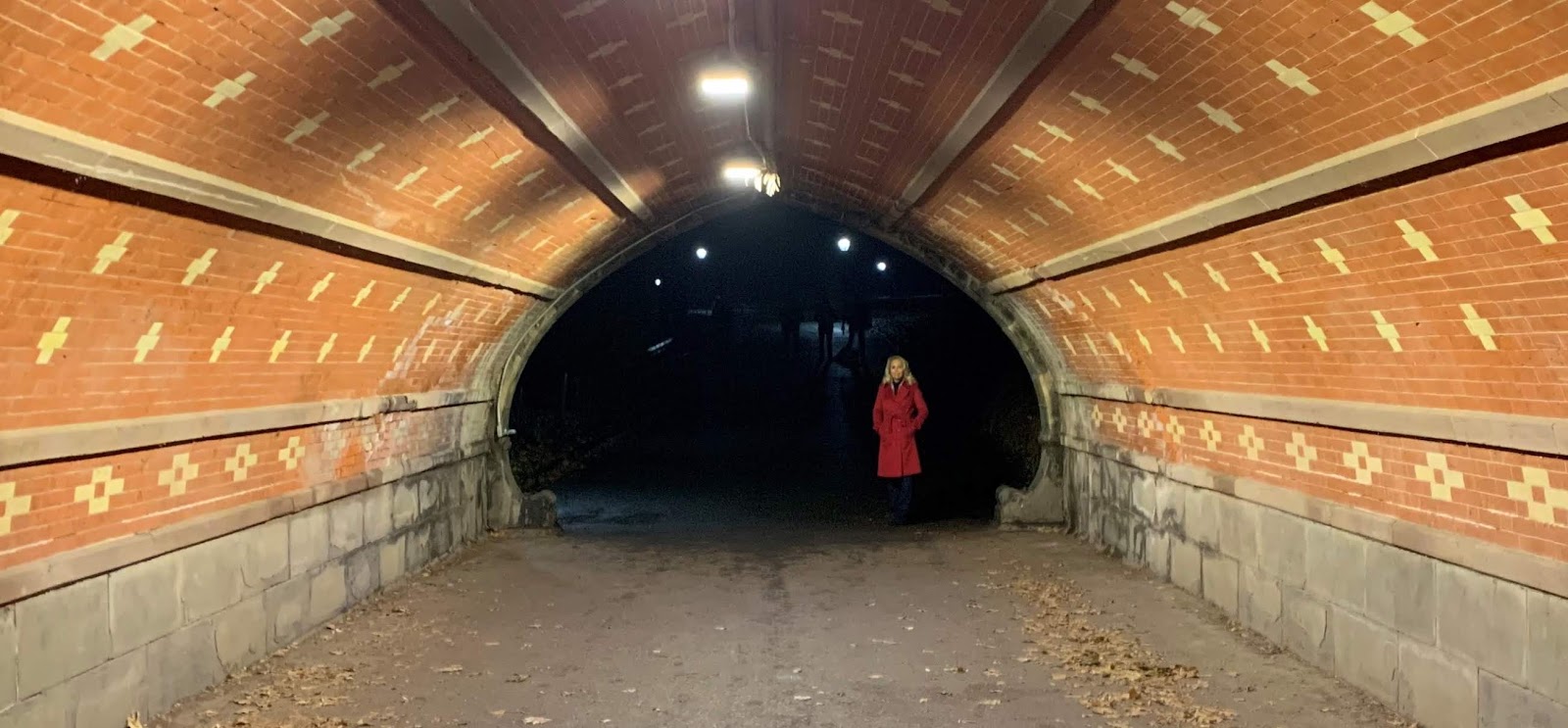
Former CIA spy, Valerie Plame, mysteriously appears under the bridge in Central Park, New York, to deliver information to me about Agent 355 who was park of George Washington's Culper spy ring during the Revolutionary War.


Valerie Plame and I pose for a photo between takes on a bitterly cold night in Central Park.


Brandon Boulay captures a beautiful shot of Cleopatra's Needle on a cold and wet January night in Central Park.


Allison Pataki and I together after filming a scene where we discussed if the wife of traitor Benedict Arnold, Peggy Shippen Arnold, could have secretly been working for George Washington's Culper spy ring.  Allison wrote a New York Times best-selling novel about Peggy's life titled, "The Traitor's Wife." 


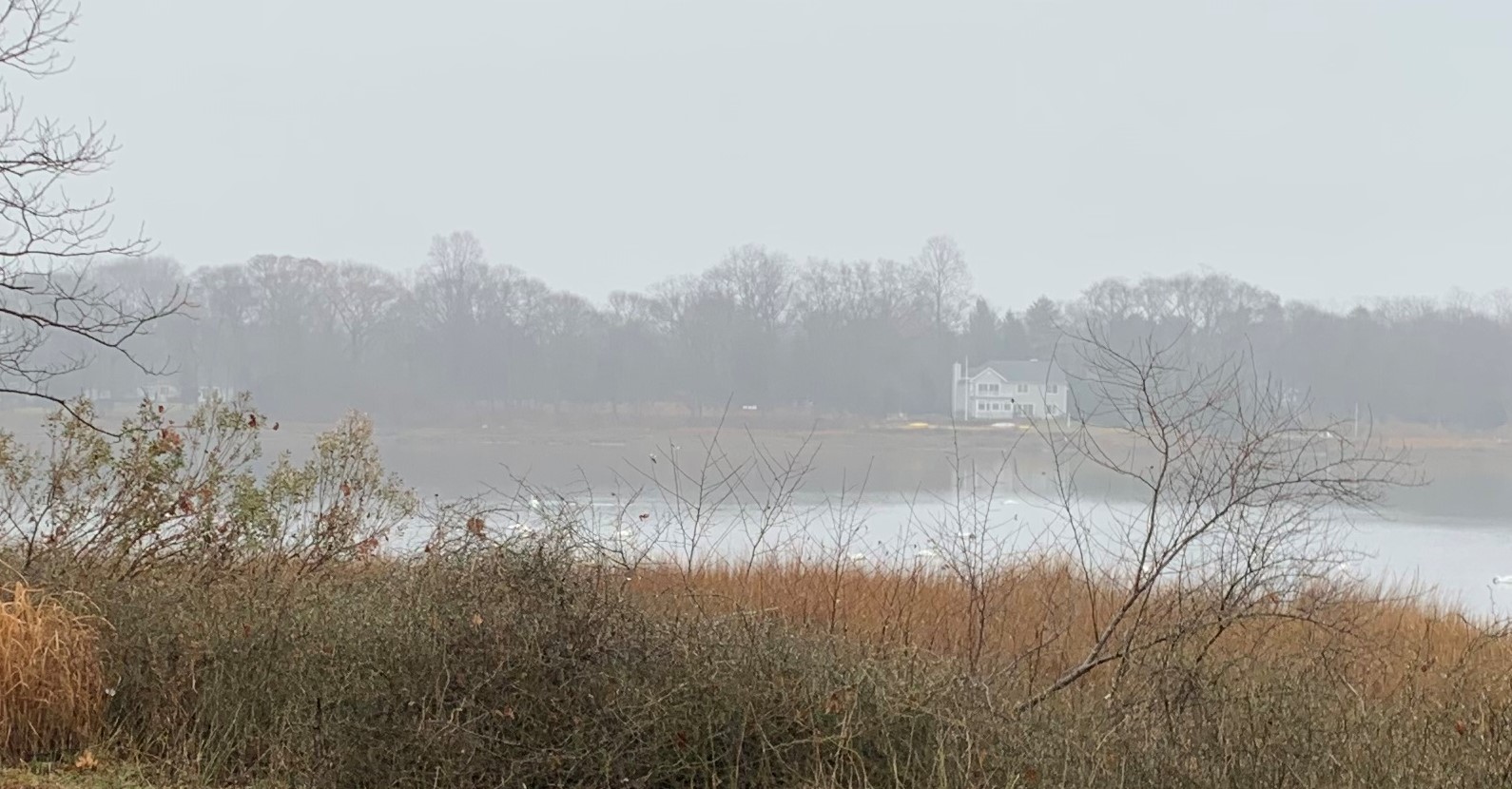
The Committee Films crew captures the view Anna "Nancy" Strong had overlooking Port Jefferson Harbor where Caleb Brewster would appear in a rowboat after crossing the Long Island Sound with intelligence about the British intended for General George Washington. 


Anna Nancy Strong would hang clothing in specific patterns on her "Magic Clothesline" to alert fellow spy Abraham Woodhull what bay Caleb Brewster would arrive in to avoid British troops. 


Abraham Woodhull's view across the bay shows the three white towels (center to the left of the white house) were visible and coded clothesline communication under the nose of the British indeed did work. 


The grave and monument of Anna "Nancy" Strong lies only yards from where she risked her life to hang her coded clothesline in support of the American Revolution. 


The conclusive evidence in my mind that Elizabeth Bergin was Agent 355 is in this December 25, 1779, letter written by George Washington.  He wrote, "From the price I entertained of her service and suffrage I have ventured to take the liberty of directing the commissary at Philadelphia to furnish her and her children with rations..."  Her service must have be mighty indeed for the General to personally write such a letter.


Tuesday, June 25, 2019

America Unearthed, Season 4, Episode 5, Good Luck Charm

How this artifact got the top of the mountain bluff outside of Rock Springs, Wyoming, back in the 1950’s is anybody’s guess.  But according to the late Harvard Professor, Barry Fell, the text was Phoenician script which started this whole journey.  The highlight of this episode for me was seeing the "Water Ghost Woman" petroglyph along with all the other amazing indigenous carvings at the sacred site very few people ever get to see.  Of course, exploring the design and history of the only replica Phoenician ship in existence that has actually sailed the Indian and Atlantic oceans was a treat as well.  I came away more convinced than ever that ancient Phoenician sailors could have made the voyage to North America, and into the Great Lakes, thousands of years ago to mine and collect 99% pure float copper.  The metal was extremely precious and no where in the world is there a better source than what is known as the Upper Peninsula of Michigan now called "Copper Country."  Although I'm convinced we proved the Phoenicians likely did not travel to the Wyoming/Colorado area to mine copper, I am more convinced than ever they did make to the Great Lakes region over thousands of years mining the precious metal that fueled the Bronze Age.  What do you think?            


Don and Patrice Bolen and I pose for an early morning photo on the first day of shooting on a bluff overlooking Rock Springs, Wyoming.


Early morning fog created a surreal scene with a giant glowing orb of the sun at our first stop on our first day shooting this episode along a rural road in southern Wyoming.


Pat Luce give the double thumbs-up sign standing on the rails where copper ore was mined from the Ferris-Haggerty mine.  The green and blue colors in the bottom of the pond are the copper carbonate minerals malachite (green) and azurite (blue) that precipitated out of the copper rich groundwater's flowing out of the mine shaft.


The world’s only known reproduction of a Phoenician era ship anchored in the United Kingdom which is appropriately named “Phoenicia.”


Captain Philip Beale and I pose for a pic on the good ship “Phoenicia.”


At an incredible secret petroglyph site in Colorado, many unique indigenous carvings are seen including the “Water Ghost Woman” on the far right.  These carvings are believed to be at least 1000 years old.


Director of photography, Brandon Boulay grabs some beautiful “B” roll footage of the setting sun along the continental divide in Northern Colorado.


Above the railroad tracks geologists and rock hounds will appreciate the basalt-filled dikes intruding older meta-volcanics in the Rocky Mountains of Northern Colorado.


Wednesday, June 19, 2019

America Unearthed, Season 4, Episode 4, "Jack the Ripper"


This episode was really interesting to make as I never knew the intricate details of the case beforehand.  This probably helped as I had no preconceived notions about the case and truly went in with a wide-open mind.  The perspective of the Friedman’s was eye-opening to say the least, and as they described the wounds of the victims two things quickly became apparent; first, there was a clear connection to one aspect of Freemasonry, and second, this aspect was something I have taken vows not to discuss with anyone other than a brother Mason.  Talk about being torn!  On one hand, here was clear and distinct evidence the Ripper had highly secret knowledge known only to Master Masons (even today details about this aspect are scant on the Internet).  On the other hand, this important evidence I was not allowed to discuss!  What I was able to say was, if true, this evidence could only have been known to a Freemason.  Most importantly, our very famous suspect, Arthur Conan Doyle was a Freemason with an interesting Masonic resume.  I found it very curious, and suspicious, that he was raised as a Master Mason in 1887, the Ripper murders happened in 1888, and in 1889 Doyle dropped out of Freemasonry and we have not been able to find out why.  While not conclusive evidence Doyle committed the murders, these facts were a huge red flag for me.

Of course, additional evidence began to fall into place as the episode unfolded painting a damming picture of our suspect.  While doubtful we would have secured a conviction at trial that Doyle was indeed Jack the Ripper, but in many ways, he was the perfect suspect leaving many lingering questions about this deeply complicated man.


Daniel Friedman, and his father, Gene Friedman, pose for a photo in Gene's home on Long Island, New York, after shooting a great scene for the "Ripper" episode.


While the Committee Films crew prepares to shoot a scene at the Newberry Library in Chicago, Illinois, Physician Daniel Friedman, poses for a photo with Arthur Conan Doyle’s Master Mason apron, and Masonic code book, along with first edition copies of Doyle’s Sherlock Holmes writings.  


Ripper expert and guest, Andrew Gough (center) and the Committee Films crew waits while a “Jack the Ripper” tour group moves on.  This is the location where the last ripper victim, Katheryn Eddowes, was brutally killed and disemboweled on September 30, 1888.  


On the street directly across from the Grand Lodge of England are several granite curb stones with interesting carvings.  This particular stone, with two "X" symbols with dots in the four quadrants, is an identical prototype to the Masonic Knights Templar cipher code.


British Masonic scholar, David Harrison, and I pose for a selfie in front of the residence where Arthur Conan Doyle lived in London when he wrote some of his Sherlock Holmes mysteries. 


I paused for a photo in the middle of my dissection of a silicone cadaver containing the internal organs of a pig that are nearly identical to humans. 


The front side of the original "Dear Boss" letter received by London police on September 27, 1888.


The back side of the original "Dear Boss" letter where it is signed by "Jack the Ripper", which was the origin of the infamous name of the killer. 


Shepard Girl submitted artwork for this episode and I though it was something worth sharing.


Tuesday, June 11, 2019

America Unearthed, Season 4, Episode 3: Courtney Cave

One of the most personally enjoyable episodes we’ve made had to be this one.  It centered around a mysterious limestone cave that touched on several poignant moments in the history of Shippensburg, Pennsylvania.  Thousands of years ago it was certainly home to many creatures looking for shelter as well as a temporary shelter and source of water for Native Americans.  It could then have served as a hiding place for the whiskey during the Whiskey Rebellion in the 1840s.  It could have also been at least a temporary shelter for slaves, like others in the area, on the run who had escaped from the south making their way to freedom along the underground railroad in the 1860s. 

Meeting Valerie Still and hearing the story of her research into her brave ancestor, William Still, was truly moving and inspiring.  One of the most powerfully moving moments we’re ever filmed was watching Valerie examine for the time the detailed journal of William Still who documented the personal information of slaves who had just escaped with the assistance of Harriet Tubman.  Another moving moment came when curator Dr. Lee Arnold, showed us one of the 50 original copies of the Emancipation Proclamation personally signed by President Abraham Lincoln.  He relayed how recently an African American woman doing research asked if she could touch the signature of Lincoln on the original proclamation.  He said normally he would never let anyone touch a document like this, but in this case, he made an exception and let her run finger over the signature with tears in her eyes.  It's time to put Harriet Tubman on the twenty dollar bill now!    

Based on Chris’ discovery of the Knights of the Golden Circle medallion, the history of the original owner of the property, and the mortared entrance leading into the cave that once inside a building it appears certain it was used as part of the rituals of the Masonic-like organization.  It was very gratifying to get the bottom of the mysterious cave and learn so much in the process.    


Chris Courtney (far left) and Janey Klebe (left) look on as Brendan Harris shoots at the entrance as a diver explores the flooded cave on a very brisk January morning in Shippensburg, Pennsylvania.


Brandon Bouley, Director of Cinematography, prepares to shoot while standing in water inside Courtney Cave in Shippensburg, Pennsylvania.


 I paused for a quick photo while descending into Courtney Cave with Director, Andy Awes, looking on at the entrance.


The Knights of the Golden Eagle Chris Courtney found in the vegetable garden behind his home in 1981 when he was 12 years old (left).  An undated photo of the cast for a ritual of the Knights of the Golden Eagle (right).


Andy Awes directs a scene from inside one of the caves known to harbor slaves in the 1860s who had escaped via the underground railroad while Brendan Harris (smiling) and Janey Klebe look on


Pennsylvania Historical Society Curator, Dr. Lee Arnold, looks on as Valerie Still reads for the first time early 1800s era adds of slave owners offering rewards for the return of their escaped slaves.  The adds were pasted on the inside cover of a detailed journal written by Valerie’s ancestor William Still, who working with Harriet Tubman, documented information of each escaped slave.


A powerful photo was taken by Brandon Bouley of Valerie Still’s hands next to the handwritten journal of her ancestor, William Still, she was reading for the first time.


Chris Courtney and I toast a glass of whiskey at a distillery near the Mason Dixon Line where we filmed the final scene of this thoroughly enjoyable and personally moving episode; thanks Chris!


Tuesday, May 28, 2019

America Unearthed, Season 4, Episode 1: Vikings in the Desert

After a four-year hiatus, we are back with a new season of America Unearthed and I am thrilled!  Travel Channel has "resurrected" the show and put all their efforts behind us which we greatly appreciate.  We come out of the gate at full speed investigating a cache of artifacts found decades ago in the desert outside of the geological paradise known as Sedona, Arizona.  Even I was skeptical at first, but when the X-Ray Fluorescence (XRF) testing came back with promising elemental results, and then ultimately they turned out to be authentic artifacts dating from the Roman era (3rd-4th Centuries) to the Viking era (10th to 11th Centuries), things got very interesting quickly.  The big question was no longer about legitimacy of the artifacts, it was how did they get to the desert southwest, reportedly inside an old and rotting leather bag?  There were really only two plausible possibilities; the collection of artifacts were left in the desert by someone, most likely a Scandinavian immigrant, in the late 19th, 20th, or early 21st Century, or somehow, a group of determined Viking era explorers made their way to what is now known as Arizona sometime in the 10th or 11th Centuries.  When do you think the artifacts made it to Arizona?


The beautiful canyon at Slide Rock State Park which isn't too far from where the Viking artifacts were reportedly discovered near Sedona, Arizona.


Harry Atkins Jr. and Bonnie Engels take a selfie with me at Slide Rock State Park just after we tested the brass artifacts with the X-Ray Fluorescence (XRF) gun.


Geologist/Geophysicist, Patrick Lehrmann, holds the steel bar he found with a metal detector we hoped was metal from a stranded Viking era ship that may have sailed here when the water of the Salton Sea covered this area roughly 1000 years ago.  


Although we didn't find the legendary Viking ship, we did find the telltale evidence of a long lost Viking...


Author and historian, David Kier and I, pose for a selfie overlooking a gorgeous bay on the Pacific side of Baja, Mexico. 


The Committee Films crew relax during a long day of filming in Baja, Mexico.  L to R, Andy, Zak, Brandon, Jim, and Miranda.    


This beautiful ship petroglyph, thought by archaeologists to be a one-thousand year-old in central Baja, Mexico, could be evidence of a Viking era ship seen by Native Americans a millennia ago.  


I did my best to mimic a large saguaro cactus at the ship petroglyph site in Baja, Mexico. 

Wednesday, December 26, 2018

The Truth about Oak Island and the Cremona Document

The following is a guest blog post by Mr. Donald Ruh, author of the 2018 book, "The Scrolls of Onteora."

"This blog was written to provide clarity about two documents that have repeatedly been the subject of past episodes, and is currently being featured on episodes airing on season 6 of the History Channel show, “The Curse of Oak Island.”  Last season, the late researcher and author, Zena Halpern, presented a map to the Lagina brothers that clearly shows Oak Island along with several words, names and phrases written in French.  Ms. Halpern appeared on the show and explained the map was related to what she called a “Templar Document”, but from here on will be referred to as the “Cremona Document.”  The Cremona Document, and the Oak Island map, were the primary subject matter of Ms. Halpern’s 2017 book, The Templar Mission to Oak Island and Beyond: The Search for Ancient Secrets: Shocking Revelations of a 12th Century Manuscript.  That 12th Century manuscript is the Cremona Document. 


Figure 1: This map which includes what appear to show Oak Island, in Nova Scotia, was posthumously given to me by my long-time work colleague and life-long friend, Dr. William “Bill” Jackson, in 2015. (Courtesy of Donald Ruh)


The reason for writing this is to ensure the correct factual information and context is known about the Oak Island map, its relationship to the Cremona Document, and the chain of events that led to confusion about the authenticity of the Oak Island map are accurately documented for the historical record.  Literally millions of people have already and continue to watch episodes of the History Channel show that have presented information about these documents that is factually incorrect. 

First, a little history about how the Cremona Document and Oak Island map came into my possession which I then shared with Ms. Halpern.  Beginning in 2006, and over the course of the next several years, I inherited several parcels of documents from a work colleague and my lifelong friend, Dr. William “Bill” Jackson.  Bill died in 2000 and left the material to me that included the Cremona Document Bill purchased in Rome in 1971, and the Oak Island map he acquired in 1994.  In 2008, Bill’s estate transferred ownership all of the original documents, and the legal intellectual rights to the material, to me as evidenced by the third page of the agreement signed by Bill’s survivors which is seen below. 

Figure 2: Page 3 of the legal document transferring all legal rights and ownership of Dr. William Jackson’s documents and research into the Cremona Document story, which includes the Cremona Document material and the Oak Island map to me.  (Courtesy of Donald Ruh)


In 2004, was when I first approached Ms. Halpern for help with an inscribed stone I found in the Catskill Mountains and she agreed to do so.  Later, she would also work closely with me on the Cremona Document material I inherited.  We formed a partnership and both signed a written agreement in 2009/2010, to write a book about our collective research.  A copy of that signed agreement between Ms. Halpern and myself is attached.


Figure 3: Page 1 of 2 of the agreement between myself and Zena Halpern we both signed in 2009/2010. (Courtesy of Donald Ruh)

Figure 4: Page 2 of 2 of the agreement between myself and Zena Halpern they both signed in 2009 and 2010.  (Courtesy of Donald Ruh)

In 2015, Ms. Halpern and I had a disagreement related to a person from Los Angeles in the television business Ms. Halpern was in contact with about doing a story related to our collective Cremona Document research.  The disagreement led to a falling out in 2016, at which time Ms. Halpern chose to forge ahead with publishing the book without me.  Around that time, she also decided to approach the Lagina Brothers with the intention of sharing the story and appearing on The Curse of Oak Island show without my involvement or participation.  Needless to say, I have not received anything in compensation for the book or acknowledgement for the content given by Ms. Halpern to the Lagina Brothers and the Curse of Oak Island program they have since presented in multiple episodes on the show that legally belongs to me. 

What the public needs to know that Ms. Halpern never knew, was the Oak Island map which came into my possession in 2015 was NEVER in any way connected to the Cremona Document material or the medieval Knights Templar.  The Oak Island map is a fabrication, most likely created by Bill Jackson as part of an assignment by the agency Dr. Jackson worked for to intentionally set up a bad guy associated with the P2 scandal in the late 1970’s.  Shortly after I discovered the Oak Island map hidden within the pages of a book by Bill in 2015, I showed the map to Ms. Halpern who immediately assumed it was connected to the Cremona Document story.  At the time, even I was unclear of the map’s association to anything until I recently found the letter below in my voluminous records that put the Oak Island map into proper context.  My only involvement in the operation was to carve the symbols on a swagger stick as directed by Bill Jackson.  The redacted portions in the letter are to protect persons involved in the P2 matter that are still living.  

Figure 5: The letter written in 1979, by Dr. William Jackson to me explained how the Oak Island map was made to create a fictional connection to the Oak Island story to entrap a bad guy involved in the P2 scandal. (Courtesy of Donald Ruh)


Certainly, mistakes were made by the late Ms. Halpern in part due to her declining health and strong desire to get the story out to the public.  However, those mistakes have resulted in false information that has already have been presented to the public on television with apparently more to come.  This letter is an attempt to set the record straight.  The Cremona Document and Oak Island mysteries are complicated and confusing enough and it’s important to get the facts straight if there is any chance of getting to the truth about these stories.

I would also appreciate the artifact (The so called “Hebrew Stone”) and all the Cremona Document related material that were in Ms. Halpern’s possession at the time of her death, that belongs to me, be returned.

Respectfully submitted,

Donald Ruh"

Mr. Ruh will be happy to answer any questions pertaining to this blog post.
Sunday, December 9, 2018

A Qualified Geologist’s Peer Review of Scott Wolter’s Geological Investigation into the Kensington Rune Stone.


Yesterday, I received an email from my recently retired acquaintance, John Parks, who lives in Texas and spends the summers with his wife and family in Wisconsin.  After reading his email I called, and we visited for a good while.  He relayed how he had read, yet again, in my most recent blog post a common theme of critics falsely claiming my geological investigation into the Kensington Rune Stone had not been academically peer reviewed.  John said he would be happy to be a guest blogger to address his own peer review of my work performed roughly a year ago.  John had long ago established himself as a more than competent geologist who would be fair, thorough, and impartial in his review.  I’ll let John talk about the peer review in his own words and I’m sure he’ll be happy to answer any reasonable and thoughtful questions:


First, let me introduce myself, my name is John Parks. Back at the end of January, 2016 I was reading through one of Scott’s blogs when the subject of his work not coming under the peer review process was the subject of much discussion and some criticism. At that point I volunteered my services to Scott to be part of the independent peer review process for his work. At least as part of the work that involved geology was concerned.


 After exchanging several emails and phone conversations we concluded that I might be of some assistance to the vetting process. Several months passed, but eventually, I had the opportunity to travel to Minneapolis and meet Scott and his wife Janet. We discussed several subjects of mutual interest including the possibility of me reviewing some of his research. At that time, I inquired if it could be possible to obtain the peer edited copies of the papers/research documents that were reviewed. Scott agreed, but indicated that the documents were in storage and could not retrieve them at that time. He said when he had the chance to pull them from storage, he would email them to me.


 Scott did just as he had indicated and sent me copies of his original research papers as well as copies of the peer reviewed copies with the comments by the various reviewers on them. There was a total of nine peer reviews that Scott sent. Prior to reviewing the comments by the reviewers, I read and reviewed the two papers that Scott asked me to evaluate. It was only after I had completed my review of the papers that I then read the other reviewers’ comments. 


The five paragraphs in quotes were included in the summary of the review that I sent to Scott. It is not the detailed review that I did. That was sent as a separate attachment to Scott.


 1. “Generally, the description of your analysis of the KRS covered the major points that needed to be addressed as to the physical characteristics of the KRS. Very good review. Your methodology of beginning with a macro description of the KRS and progressing through medium-scale elements of the stone, finally ending with finer-scale details at the mineral- and elemental-levels gives the reader a through summary of the details of the KRS and how you came to your conclusions.   

 2. “I thought that the analysis of the diagenesis of the minerology (micas) in the KRS was the strongest portion of your analysis of the KRS. It was based on well-documented, technical support, such as the numerous SEM photomicrographs that were utilized. The comparison of the weathering characteristics of the KRS and the tombstones added support to your hypothesis that the KRS carving was likely not a modern (1898) hoax.  


 3. “The figures in the copy of the report that I received were sometimes fuzzy and difficult to view the items being discussed in the captions. This may have been a poor copy of the original, not sure. As noted in my review of the paper, if you add more arrows (larger and/or more obvious) pointing to the objects being discussed in the text or captions, it would add to the reader's understanding what the text is describing.


 4. “In the text, on a couple of points relating to the runes themselves, you mention the possible intent of the KRS carver. While the statements may, in fact, describe the intent of the carver, they are conjecture and there does not appear to be enough physical evidence to support the interpretation (e.g. p4, point 5 – the tapering of the KRS for that end to be put into the ground and p28 referring to the same idea).    


5. “This is a good paper and gives the reader a balanced view of the physical description of the KRS. As well as support for the conclusions concerning the age of the carving of the runes.”


 I hope that this addition of at least one reviewer’s general evaluation of Scott’s analysis of the geologic aspects of the KRS to the exchange of views contained within this blog might lead to some possible clarification of the peer review process that has been carried out on Scott’s analysis of the geology of the KRS.


 For those that are not aware of my academic and professional background I include below. This is an update to a portion of a reply on this blog from January 2016.


I shall begin with a little background about myself which would be in order, then, as well as at this time. I, like Scott, am a geologist and scientist. I received a MS Degree in Geology from the University of North Carolina – Chapel Hill, where I worked at the McCarthy Seismology Lab as a Research Assistant. Additionally, much of my graduate work was also spent in structural geology and igneous & metamorphic petrography. I studied at the Duke University Marine Geophysical Lab where I did my research for my MS thesis. Additionally, I taught for 3 years at Austin Peay State University as an Instructor of Geology. I did field research on aspects of geomorphology (co-authored several publications). My undergraduate degree was in Art with majors in Art History & Painting. I have retired after spending over 35 years at ExxonMobil in exploration and production geology and geophysics. While at ExxonMobil, in addition to my duties as Technical Team Lead and Supervisor, I taught classes in advanced stratigraphic concepts, as well as regional and field development geology.


While this is not a double-blind review (meaning that both the reviewer and the author identities are concealed from the reviewers, and vice versa throughout the review process), as some readers had mentioned should have occurred, my analysis of the papers were still an unbiased review. Both positive and negative comments were given. I did not agree with all that Scott indicated in the papers, but the science behind the geology, especially the analysis of the diagenesis of the minerology (micas) in the KRS, I considered to be the strongest portion of his analysis of the KRS (from a geology standpoint). I made no evaluations on the runes themselves from a linguistic standpoint (of which I am not qualified to comment on, other than in regard to weathering processes).


The documents that Scott sent me to review were not the chapter on the geology (Chapter 2) of the KRS in KRS – Compelling New Evidence (KRS-CNE) specifically, but two separate evaluations that together did form the core of the geologic analysis of the KRS that did make up the chapter. As mentioned above, these documents were previously reviewed by nine other individuals. These individuals were familiar with the level and background of Scott’s investigative analysis on other geologic subjects.
As far as my review of these documents, I was concerned with
  1. The process of data collection - how the data was collected and under what conditions.
  2. Were there data collected that would indicate or preclude that the KRS inscriptions were carved in the late 19th century.
  3. The collection of base-line data for comparative analysis dealing with the weathering processes and characteristics of known-age samples. And do the base-line samples have a bearing on the age of the inscription?
  4. The characteristics and morphology of the KRS in both the non-carved surfaces, in comparison to the carved runes, and the evaluation of the similarities and differences.
  5. The geologic provenance of the KRS (essentially meaning where did the rock originate).
  6. What were the conclusions derived from the data collection and analysis consistent?


The petrographic report (Pet Report SW 101203) began with a short summary of the unearthing of the KRS as reported by Olof Ohman. There was also a brief review of the initial analysis of the stone that occurred in the late 19thand early 20th century, as well as the conclusions of those investigators. This background information was later greatly expanded and added to in considerable detail in KRS-CNE. In my review I noted to Scott that at least three references should have been cited in this section, but were not. However, that oversight was remedied in the KRS-CNE when it was published three years later in 2006. These reference omissions related to work by Hjalmar R. Holand and George O. Curme.
The next section involved a general description of the KRS and its physical features. The six sides of the KRS were defined with accompanying photographs, such as the ‘Glacial Face Side’ with the first nine lines of the inscriptions. These were straightforward for the most part. However, on Side 5, named the ‘Glacial Bottom End’ Scott describes that side as “this end tapers sharply with a beveled edge that appears to have been intended to be put in the ground”. This point was outside the bounds of a description of the physical characteristics and crossing into the area of interpretation and speculation as to the intent of the carver. As mentioned in the summary at the beginning of this blog (see above point 4), while the statement may, in fact, describe the intent of the carver, the interpretation is conjecture and there does not appear to be enough physical evidence to support the interpretation. [see p. 16, KRS-CNE].
Throughout the Pet Report SW 101203, as well as the other report I reviewed (KRS 3D Report 2-20-11), I noted numerous places in which Scott was describing various physical characteristics of the KRS. Both at the macroscopic, as well as at the microscopic level utilizing photographs. In some of the cases the feature being described would be clearly identified and labeled in the photograph. An example of this helpful process of assisting the reader in understanding what is being describer can be seen as the arrows on the photograph pointing to the six indentations along the edge of the ‘Glacial Side’.  [see p. 21, fig. 16, KRS-CNE].

However, this was not done in all photographs. Two examples where this non-labeling process occurred can also be seen in the KRS-CNE. The first is the figure description at the macroscopic level of “three dark gray vertical lines on the side are weathered joint fractures.” [see p. 15, fig. 2, KRS-CNE].

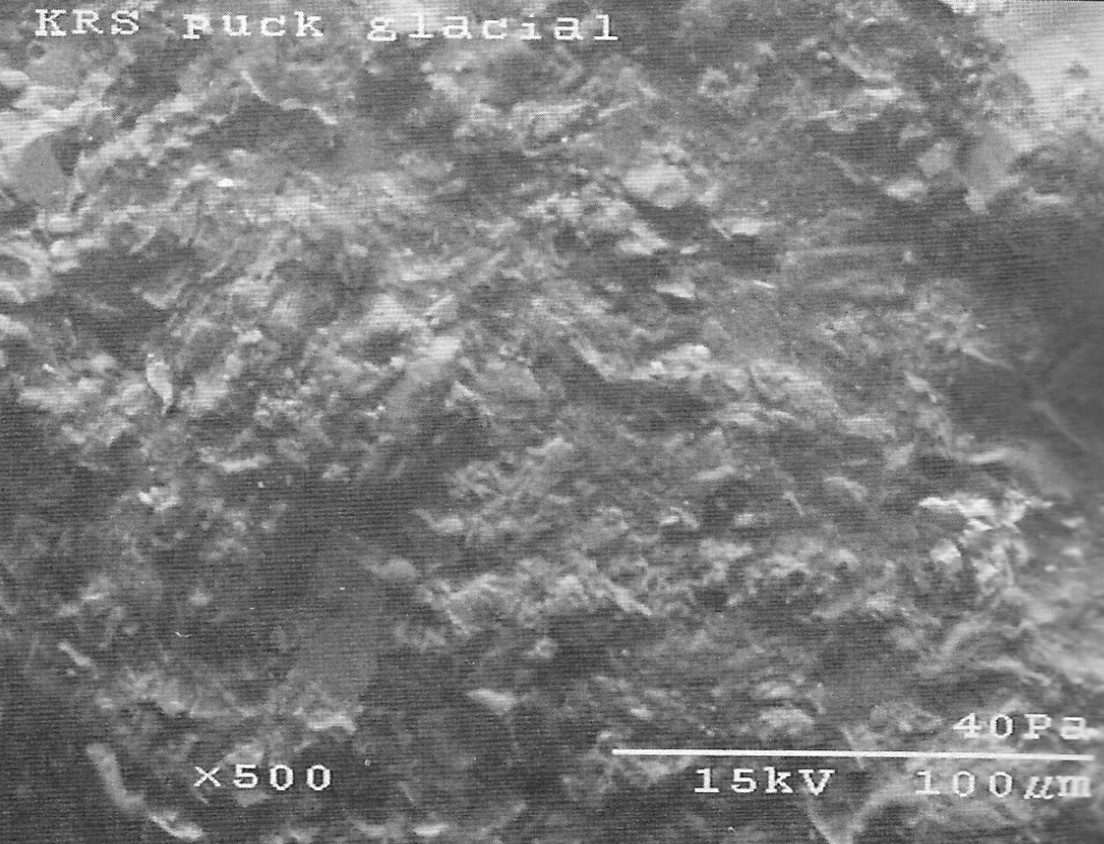
The other is at the microscopic level of an SEM image showing “numerous bladed-shaped biotite and muscovite mica minerals”. [see p. 37, fig.36, KRS-CNE].

Labeling of the mica minerals on this figure, as in other unlabeled items being discussed in other portions of the papers, would have helped the reader avoid any misunderstanding of what was being described. To a geologist, a mica mineral surface is obvious. To a non-geologist it may not be so apparent.
I should mention at this point that references to pages or figures in the KRS-CNE are included here as examples. The images shown here, or referenced, were also contained in the reports that were reviewed. For those that have copies of the KRS-CNE, it should assist the present readers in following along with this recap of some of the features of the reviews I undertook without the readers having the reports themselves (Pet Report SW 101203 and KRS 3D Report 2-20-11.
The physical characteristics of the varying sides of the KRS were discussed. Variations in the appearance of the surfaces were dealt with, as well as potential source processes for the origins of those features. An example of this included a discussion of the thin (1-2 mm thick), tan-to-white triangular-shaped area in the lower left portion of the ‘Glacial Face Side’. [see p. 17, fig. 7, KRS-CNE].

This is the surface where the majority of runes are located. Scott mentions that is surface is composed of a course-grained crystalline calcite (CaCO3) and that the most likely source for the origin of this deposit is that calcite, in solution, traveled along fractures (joint system), which was parallel to the ‘Glacial Face Side’ of the KRS and deposited in the joint space. Essentially, this is hydrothermal calcite. Possibly in placed during the low-grade metamorphism that the KRS parent rock experienced. Also identified were elongate chlorite [(Mg, Fe, Al)6 (Al, Si)4 O10 (OH)8] crystals contained within the layer of calcite which exhibit, parallel to the long axis of the KRS, a preferred orientation.
The recognition of the characteristics of this hydrothermal calcite is significant because several of the runes are carved in the material. Scott described the calcite layer in regards to its relative hardness (Mohs hardness scale), of which it is much softer than the host meta-graywacke rock. It was noted in a microscopic examination utilizing reflected light exposed little difference the textural characteristics and the apparent weathering within the runes and the region adjacent to the carving. At the end of the evaluation it was noted that “Further study of the weathering of the characters within the calcite area might yield additional information about the relative age of the inscription. We have not pursued further analysis at this time sue to the reluctance of the current need for invasive test sampling within this area.”
Two points to make concerning the Scott’s comments are in order. First, a reevaluation of the calcite deposit brought an observation to light that was not initially evident, in that no apparent weathering boundary or ground line was able to be identified. This observation may bring into question whether the KRS was upright for any amount of time. This last statement was included in the KRS-CNE p. 17. It does indicate that Scott continued his evaluation of the KRS during the three years from the initial investigations to the publishing of the KRS-CNE. Second, is his statement for the resistance for “invasive test sampling”. This indicates the hesitancy to run destructive tests that would compromise the integrity of the artifact.


The geologic provenance of the KRS (where and under what conditions the stone originated) was a first order question that was addressed in the papers. Scott observed striations (scratches or gouges) that occurred only on the ‘Glacial Back Side’ surface. The circle in the middle-upper portion of the image is the core hole. [see KRS-CNE p. 19, fig 10].

These striations ran roughly parallel to the long axis of the KRS. He interpreted that the KRS was part of the bedrock with the ‘Glacial Back Side’ being the top of the bedrock surface. The remaining sides of the KRS remained in situ as part of the bedrock. He reasoned that these striations developed as the glacier moved across the bedrock digging into the underlying bedrock. Subsequent to the striations being formed at the base of the glacier, the KRS became dislodged and was plucked from the bedrock and became incorporated in the advancing ice. The KRS was then carried away from the parent rock to be eventually deposited as the glacier melted approximately 12,000 ybp (years before present). The lack of striations on the other surfaces for the KRS was reasoned to be due the nearly abrasion-free transport mechanism of being imbedding within the ice. The interpretation of the morphology of the surfaces is consistent with the known processes of glacial erosion and transport.
As part of the analysis of the KRS a single core sample was taken from the ‘Glacial Back Side’. The core measured 33 mm (1 ¼”) diameter by 50 mm (2”) long. The core site was selected to
     1. Avoid damaging the runes,
     2. Obtain a sample of the stone to determine the mineral composition of the stone and,
     3. Provide rock for thin-section analysis and additional studies of the weathered surface.
The area cored included a branching portion of one of a pair of white lineations and a likely joint fracture. [see Pet Report SW 101203, p. 30, fig. 35].


The top 13 mm (1/2”) was cut off of the core. This newly cut portion was then cut perpendicular to the top surface and perpendicular to the white lineation. Cutting of the core this way created a cross-sectional view of the white lineation which allowed the physical characteristics of the lineation to be observed. [see KRS-CNE p. 30, fig. 27].


The analysis of the whitened color was interpreted to be the result of chemical leaching of the magnesium and iron elements from the biotite minerals that are present in the stone. This analysis supports the interpretation that the two white lineations were produced from contact with a root system. Additionally, the interpretation that the organic-based origin of the lineations suggesting “prolonged contact in the ground with tree roots” [Pet Report SW 101203, p. 33] is consistent with the data. However, the term “prolonged” is not defined.


The differences between the descriptions of several witnesses of the size of the tree roots that were attached to the ‘Glacial Back Side’, approximately 76 mm (3”) and the width of the white lineations measured in this study, 13 mm (1/2”) were addressed. The interpretation for the inconsistency of the two widths relates to the active ends of the immature roots trying to acquire nutrients during an early age in the root and the later stage when bark grows around the root, increasing in width with time. Based on published research [KRS-CNE p. 33], this interpretation seems justifiable. 


Thin sections were cut from the core sample. By examining the thin sections, the KRS’s component lithic and mineralogy could be determined. The thin sections were examined under plane-polarized transmitted light using a polarized light microscope. This process is called optical mineralogy. A portion of the core was cut off and secured to a glass plate with epoxy. The small rock sample was then ground to a thickness of 0.03 mm. At this thickness, light can pass through the rock. [see KRS-CNE p. 34, fig. 31]

The thin sections were examined to determine the minerology of the KRS, which is classified as a metagraywacke. A greywacke is a type of sandstone generally characterized by poorly sorted angular grains of quartz, feldspar and lithic fragments (small rock fragments) usually set in a clay-sized matrix. It is normally a texturally immature sedimentary rock. The KRS was described as being “comprised dominantly of mostly angular, fine-grained quartz, orthoclase feldspar, and rock fragments.” [see KRS-CNE p.34]
Multiple point counts were preformed to determine the mineral composition of the KRS. The results were cross-plotted on triangular diagram with percentages of quartz, feldspar and rock fragments at the apex, against other types of greywackes. [see KRS-CNE p.35, fig. 33].

The analysis was performed by Dr. Richard Ojakangas, Professor Emeritus of Geology from the University of Minnesota – Duluth. Dr. Ojakangas’ conclusion was that the mother-rock for the KRS probably originated in the Paleoproterozoic  Amimikie Basin in east-central Minnesota, with an age of about 2 billion years. [see KRS-CNE p.35] [see KRS-CNE p.C10, plate 18].

The analysis also indicated that “elongate detrital grains exhibited a preferred orientation that [was] sub-parallel with the foliation.” [see KRS-CNE p.34]. Foliation refers to repetitive layering within the rock. The foliation consisted of muscovite, chlorite and biotite (all are sheet-like mica minerals) that makeup the matrix. Scott indicated that the “presence of cleavage, a mild foliation and the [presence of the] mineral chlorite” was indicative of low-grade metamorphism. [see KRS-CNE p.34]. An additional, secondary orientation of the micas, approximately 90 degrees to the major orientation was interpreted to represent a second metamorphic event.  This mineral analysis of the KRS is consistent with classifying the KRS as a greywacke that has undergone multiple low-grade metamorphism. [see KRS-CNE p.C9, plate 16].

After completing analysis on the macroscopic level and at the microscopic level utilizing thin-section optical polarized light microscopic examination, Scott began a study to determine additional weathering characteristics of the KRS. A chip sample measuring 13 mm (1/2”) X 6.5 mm (1/4”) X 3.25 mm (1/8”) was obtained from the ‘Split Side’ of the KRS. [see KRS-CNE p. 37, fig. 35].

This is the face with the last three lines of runes. Some of the runes can be seen on figure 35 at the top of the photograph, as well as the ‘H’ carved by Hjalmar Holand in 1907 toward the bottom of the figure. Taking a sample of the stone that has similar appearance and physical characteristics as the carvings of the runes, it is logical for additional analysis to be performed on this surface. The sample was examined utilizing scanning electron microscopy (SEM), elemental mapping and energy dispersive x-ray analysis (EDX). The facilities at the Materials Laboratory at Iowa State University were used to test the core sample and the stone chip.
The top (or originally exposed glacially eroded and weathered surface) of the core was examined utilizing a scanning electron microscope (SEM). The SEM showed fine-grained pitting that was uneven with exposed angular minerals of quartz and feldspar present. However, the softer bladed mica grains, which make up a significant portion of the rock were essentially not present. [see KRS-CNE p. 38, fig. 37].

As noted by Scott, this surface represents the glacially weathered portion of the KRS. The Wisconsin Glacial Episode, is also termed the Wisconsinan glaciation, and was the most recent glacial period of the North American ice sheet complex. This most recent glacial advance reached its maximum extent around 18,000 ybp, then started retreating, but a final glacial advance occurred about 12,000 ybp.  It may have been during this last advance that the KRS was deposited as a small glacial erratic (stones picked up by the glacier and deposited away from its point of origin. Some erratics are small like the KRS and small are as large as houses. It is logical that the weathering on this side of the KRS does reflect, at a minimum, 12,000 years of weathering.
The base of the core and the part of the chip that had been attached to the KRS were examined. These two samples represent freshly fractured surfaces and exhibit mineral faces that have not been subjected the weathering. These surfaces would be representative of surfaces from the time of the original carvings. [see KRS-CNE p. 38, fig. 36].

The SEM photograph above was taken of the freshly broken part of the chip sample. Many mica and biotite mineral blades (sheets) were identified by EDX process. No weathering is present on this fresh surface. Compare this image of the fresh surface with its many sharp mineral grains with the previous figure that shows rounded mineral grains that are indicative of prolonged exposure to the effects of weathering. 

A major portion of the paper was involved in describing the weathering characteristics of the KRS. This analysis of the different sides of the KRS was discussed and was part of the supportive evidence into the evolution of the morphology of the KRS. One question that Scott addressed and attempted to obtain, at least a qualitative answer for, had to do with the actual age of the rune carvings. There are two dates that are of major importance. The first is the date of assumed discovery of the KRS by Olof Ohman - 1898. The second, is the date inscribed on the KRS itself - 1362. 

The authenticity of the discovery will not be addressed here. However, the technique to address the comparative age of the inscription will be reviewed. The approach that was taken was to compare samples taken from tombstones found in Hallowell, Maine. In the paper reviewed there was no discussion as to why this particular cemetery was chosen over other cemeteries. It would have been appropriate for Scott to have included the reasons in his paper. That said, the paper reviewed did go into an assessment of the criteria that would be needed to do a comparative study of the weathering characteristics of the mica minerals in the KRS and weathered mica minerals from tombstones of known ages.

The weather conditions should be similar between central Minnesota and the region where the tombstone samples would be collected. The ages of the tombstones would need to cover the years in question, from 1898 to 1362. This, in North America, was, of course, not possible. At least as far as the earlier date is concerned.

The size of the mica mineral grains of the tombstones should be similar. This is important to the fact that, assuming similar conditions exist, the smaller the mineral grain (smaller surface area), the faster the weathering will progress and alter the micas.

Obtaining samples above the ground level and below the ground level would be important data points with which to compare with the KSR since it has been suggested that the KRS was “apparently shaped or ‘dressed’ prior to the carving of the inscription”. (Pet Report SW 101203, p. 33). Unfortunately, only samples above the ground were collected due to the ground being frozen at the time the samples were taken. 23 samples were obtained for the comparative mineral study. Only 3 of these samples were deemed acceptable in terms of mica grain size. Three samples are a very small data set to compare weathering characteristics to the KRS. It is recommended that additional samples be collected to be statically significant.

It should be noted that there are numerous monuments and markers throughout Europe that cover the dates that are of interest. These could be potential candidates to be utilized if an expanded comparative age-dating study were ever undertaken. It would add additional data and put more constraints on the interpretation if a search were carried out to determine if other studies in Europe have been published utilizing the SEM to evaluate mica weathering characteristics. But, in this study, the older European carvings were not considered.

Below are SEM images of the KRS (on the left) and the Abner Lowell tombstone (dated 1815) (on the right). [see KRS-CNE, p. 40, fig. 39]. As can be seen, the size of the bladed mica grains are generally similar in size and texture with sharp edges exhibited on both rock chips.


The weathered surfaces of the three rock chips from the tombstones exhibited features of decomposition of mica. These features included: sheets of biotite expanding and separating; individual edges of minerals became rounded and frayed; pitting; exfoliation of individual biotite sheets; and the development of lichen on the surface of the tombstones that accelerates dissolution of the biotite grains.

The results of the tombstone study resulted in an interpretation by Scott. That the relative age of the KRS carvings was now possible. His view was that the relative age of the KRS inscription was older than the inscriptions on the tombstones in Hallowell, Maine examined (approximately 200 years old). Therefore, the “biotite mica that was exposed at the time of the original inscription on the KRS took longer than about 200 years to completely weather away”.

His interpretation is entirely consistent, given the data that were obtained from the KRS and the tombstones.


In summary, I find the techniques in data collection, data analysis and comparative evaluation that were used in the 2003 study to be internally consistent with the interpretation that whoever carved the KRS did so certainty not in 1898, and likely earlier than the age of the tombstones studied (1805-1815).